


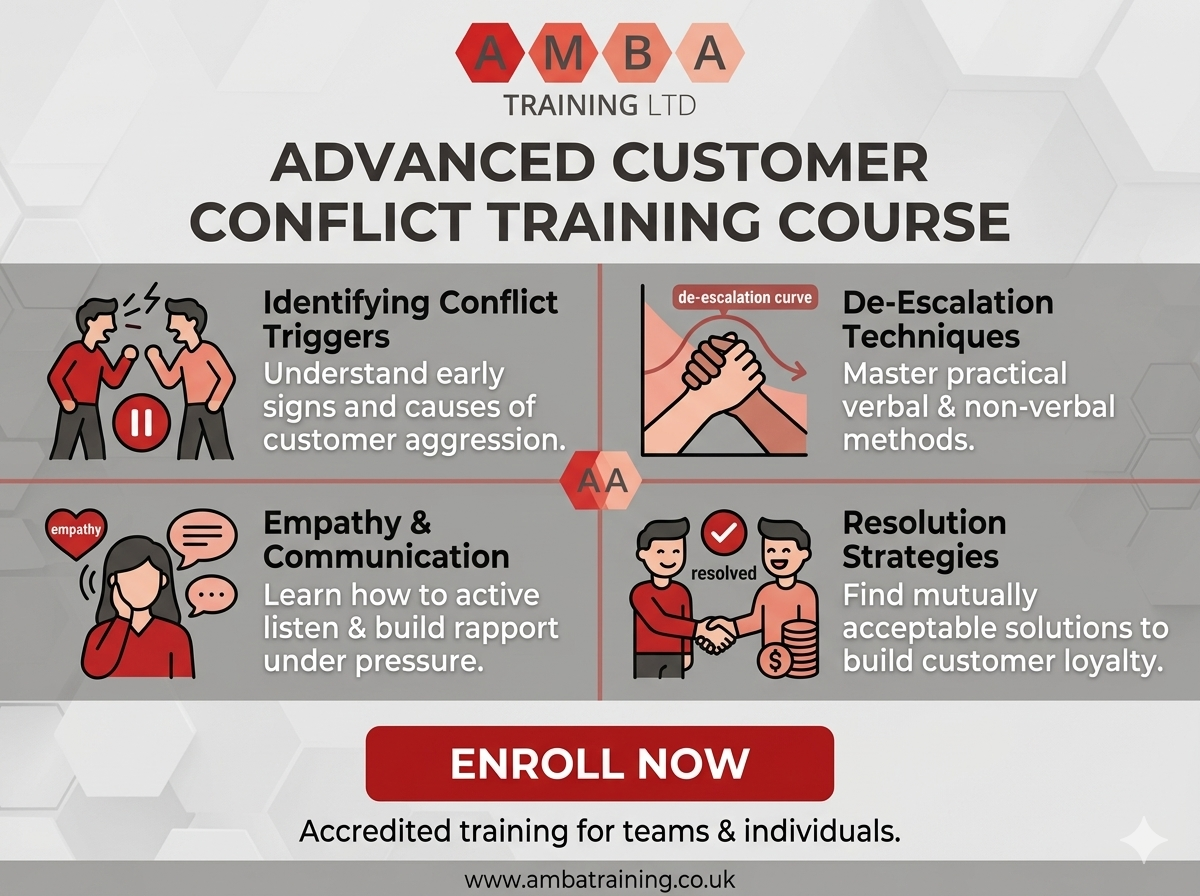
All businesses experience customer conflict training course at some point. Customers may complain, misunderstandings may arise, there may be delays, or there may simply be an environment that creates tension between the employees and customers. For this reason, many firms have begun to invest in a customer conflict training course.
There are those who assume that a customer conflict training course solely deals with addressing angry customers. However, the training covers other areas such as communication, emotional regulation, teamwork, and improving customer service. The best thing about the skill set taught is that it applies across various industries.
From retail to healthcare, from hospitality to security services, communication skills are always critical. Through this blog, you will understand everything that is necessary in simple terms so that you do not feel overwhelmed.
What is a Customer Conflict Training Program?
Customer conflict training courses teach staff how to handle challenging customer scenarios with professionalism and calmness.
This program emphasizes effective communication, listening skills, conflict avoidance, and emotional intelligence. Staff will also learn to remain professional when handling challenging conversations and minimize tensions that may escalate later.
New learners may experience some anxiety while participating in role-playing exercises, but this improves with more practice.
Why Customer Conflict Happens
Customer conflict can happen for many different reasons.
Some common causes include:
| Cause of Conflict | Example |
|---|---|
| Delayed Service | Long waiting times |
| Poor Communication | Misunderstood information |
| Product Problems | Faulty or missing items |
| Stressful Environments | Busy workplaces |
| Customer Expectations | Different service expectations |
A customer conflict training course helps employees understand these situations and respond more professionally.
Reasons Why Organizations Should Provide Conflict Resolution Training
Organizations have now realized that customer experience impacts organizational reputation.
Conflict training for customers assists employees in enhancing their communication skills and problem-solving capabilities, which will increase customer satisfaction levels.
Conflict training also decreases job-related stress among employees since they become more comfortable handling conflicts.
Most organizations observe improved teamwork and positive customer feedback following training sessions.
Who Should Attend This Training?
Almost anyone working with customers can benefit from a customer conflict training course.
This includes:
| Industry | Suitable Roles |
|---|---|
| Retail | Sales and customer service staff |
| Hospitality | Hotel and restaurant employees |
| Healthcare | Reception and support staff |
| Security | Frontline security workers |
| Education | Student support staff |
Managers and supervisors also benefit because they often deal with escalated customer issues.
What Employees Learn During Training
A customer conflict training course covers practical communication and customer service skills.
| Topic | Learning Focus |
|---|---|
| Communication Skills | Speak calmly and clearly |
| Active Listening | Understand customer concerns |
| Emotional Awareness | Control reactions professionally |
| Conflict Prevention | Reduce tension early |
| Problem Solving | Find practical solutions |
Some activities feel little uncomfortable at first, but practical exercises help learners improve quickly.
Advantages of Customer Conflict Training Course for Employees
Employees can become more relaxed when communicating under pressure. They can learn how to be professional and calm during complaints.
The employee will have better communication skills and can create strong relations with their clients.
Some employees may be less nervous after acquiring valuable skills on how to manage customer conflicts.
Benefits of Customer Conflict Training Course for Companies
Companies can enjoy numerous benefits from completing the customer conflict training course.
Improved communication skills among employees can help boost customer satisfaction and reduce complaints. Employees may also find it easier to resolve issues quickly.
Employee morale may improve because the worker feels supported and can handle the problem efficiently.
If the client is happy with their experience, they will visit the company again.
Duration of the Course
The duration of a customer conflict training course is determined by the provider and the training level.
Basic courses can be one-day training courses, whereas advanced courses can take a couple of days.
Companies have also started organising individual training courses according to workplace needs.
Organising regular refresher courses helps employees enhance their skill levels.
Costs of Customer Conflict Training
The cost of conflict training is decided on the basis of the training provider, course level, and number of people enrolled.
Training for basic courses can begin at around £100. Advanced courses can charge higher fees.
Some companies go in for online training as an alternative option that saves money.
Good-quality training always yields better results than low-cost training.
Mistakes That Employees Often Make in Customer Conflict Situations
Customer service issues often arise when people act based on emotions rather than professionalism.
These are some mistakes that employees often make:
- Interrupting their clients
- Using harsh tones while conversing
- Overlooking client complaints
- Being defensive
- Shunning communication
A customer conflict training class educates employees about these mistakes and teaches them proper communication skills.
Why Good Communication is Important
Effective communication will help employees provide an enhanced experience for their clients.
In a customer conflict training course, employees learn how to listen well, describe the situation appropriately, and conduct themselves professionally in tense situations.
Effective communication can minimize misunderstandings and increase the level of trust between companies and their customers.
Employees who have good communication skills usually exhibit confidence in the workplace.
Selecting the Correct Trainer
When seeking out a conflict training course, selecting the right trainer becomes crucial.
It is advisable to review the trainer’s credentials, experience, and teaching techniques. A good trainer simplifies complex customer scenarios and makes them realistic.
While some trainers emphasize theory, practical sessions help trainees grasp the actual circumstances better.
Competent trainers create favorable learning conditions for the employees.
Benefits of Career from Conflict Management Skills
The ability to manage conflict may be beneficial to careers in various fields.
Employees that undergo conflict training become more competent communicators and leaders.
A manager prefers an employee who does not panic while dealing with difficult customers.
This skill may assist employees in taking up management and supervisory roles in the future.
Is Customer Conflict Training Worth It?
Yes, customer conflict training course is worth it.
The training equips individuals with good communication skills, good customer relations, and boosts confidence in managing conflict situations.
Employees usually gain confidence in managing customer conflicts after undergoing training. Business also benefits through good relations with customers and better workplace morale.
Good communication skills can never be redundant in any field.
Frequently Asked Questions (FAQs)
1. What is a customer conflict training course?
A customer conflict training course teaches employees how to manage difficult customer situations professionally.
2. Who should attend this training?
Customer service staff, managers, retail workers, hospitality staff, and healthcare employees can benefit from training.
3. How long does the course take?
A customer conflict training course may last one day or several days depending on course level.
4. How much does customer conflict training cost?
The cost of a customer conflict training course depends on provider, course structure, and group size.
5. Is the training difficult?
No, most learners complete training successfully with participation and practice.
