


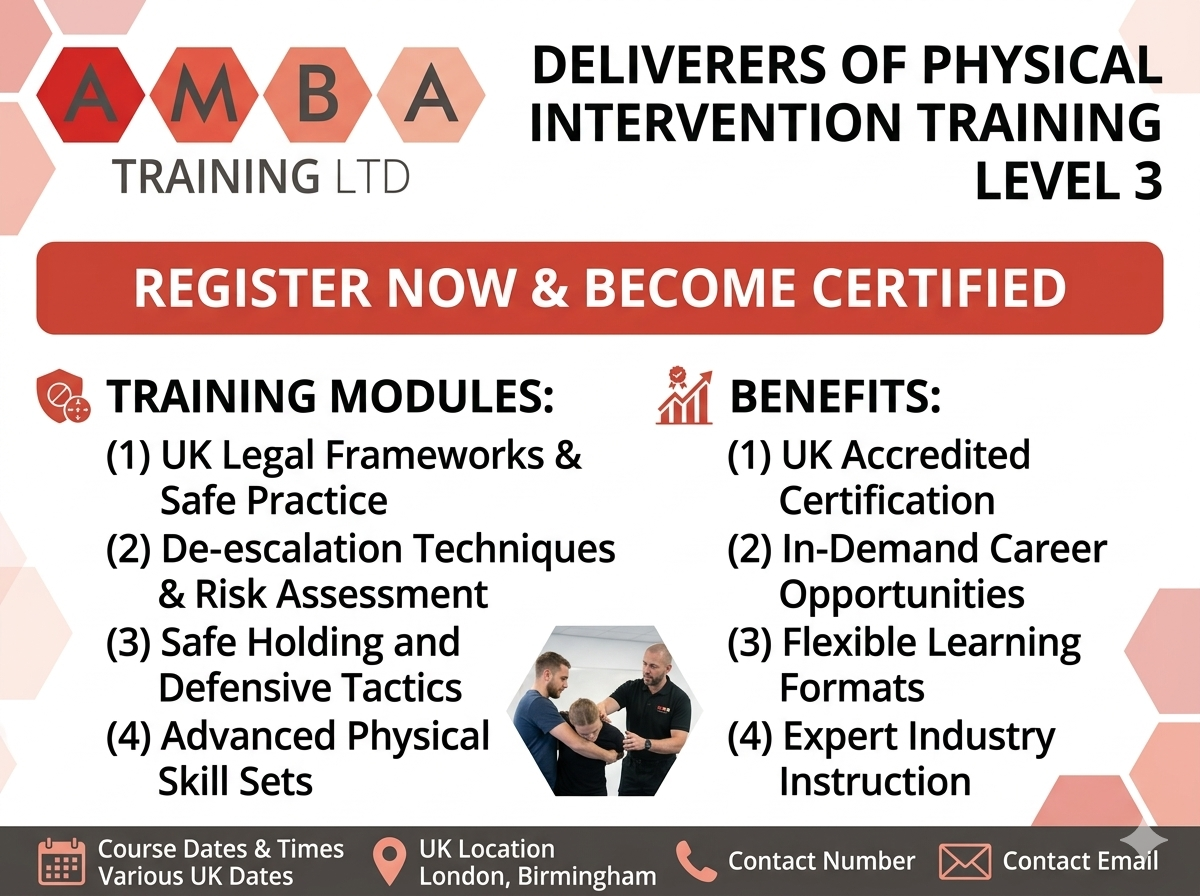
The UK security and safety sector grows annually, which increases the demand for qualified trainers. Now there is a high demand for professionals who know how to teach safely restraining techniques, dealing with conflicts and working safely. That is why the number of physical intervention training Level 3 searches increases, and people wish to become trainers and have successful careers in this sphere.
Firstly, it should be noted that not everyone knows that deliverers of physical intervention training Level 3 includes more than just physical skills. Learners acquire skills related to communication skills, legal issues, methods of teaching, safety awareness, and risks management, which are essential for delivering safe training sessions.
Fortunately, it is not necessary to have a lot of teaching experience before becoming a trainer. There are many ways to become one with adequate practice and self-confidence. In our blog, all information is presented in simple words, so that everyone can understand easily.
What Is Deliverers of Physical Intervention Training Level 3?
Level 3 physical intervention training prepare individuals to train in physical intervention and workplace safety skills.
This qualification emphasizes safer restraint techniques, minimizing risks in challenging situations, and enhancing confidence in teaching. Other areas covered in the course include safe and professional delivery of training exercises.
Initially, some students may be hesitant during practical classes; however, confidence levels increase with time and practice.
Importance of Physical Intervention Training
Many working environments are likely to encounter challenging issues such as aggression, conflicts, or danger.
Level 3 deliverers of physical intervention training prepare individuals to train their fellow workers in safe management of the challenging situations in order to minimize injury risks.
Physical intervention training is essential in maintaining a safe work environment and encouraging professional conduct in emergencies.
Employers expect many employees to have adequate knowledge about workplace safety procedures and communication skills.
Who Can Join This Qualification?
Most people joining deliverers of physical intervention training Level 3 courses already have experience in customer-facing or security-related roles.
This may include:
| Industry | Suitable Roles |
|---|---|
| Security | Door supervisors and guards |
| Healthcare | Support workers and nurses |
| Education | Behaviour support staff |
| Hospitality | Event and venue staff |
| Retail | Loss prevention teams |
Strong communication and confidence help learners perform better during practical activities.
What You Learn During the Course
A physical intervention training Level 3 qualification covers both practical safety skills and teaching techniques.
| Topic | Learning Focus |
|---|---|
| Physical Intervention | Safe restraint methods |
| Communication Skills | Handle difficult situations calmly |
| Risk Awareness | Reduce injury risks |
| Teaching Methods | Deliver professional training |
| Legal Responsibilities | Understand workplace regulations |
Some practical activities feel little difficult in the beginning, but regular practice helps learners improve quickly.
What Should Be Done Before Beginning
Most providers that offer physical intervention training Level 3 courses suggest learners have prior experience working in workplace safety and security.
Some learners undertake qualifications like:
- AET – Award in Education and Training
- First Aid
- Conflict Management
- Security
In some cases, real-world experience in the workplace can make it easier for learners to comprehend actual scenarios.
Duration of Learning and Assessment Methodologies
A deliverers of physical intervention training Level 3 course normally lasts a few days to several weeks.
For instance, some learners opt for classroom-based learning due to their preference for practical learning. Some other learners pick blended learning where there is both online learning and classroom learning.
Assessment methodologies can include:
- Demonstrations
- Classroom teaching presentations
- Assignments
- Group activities
Practice is extremely crucial throughout the learning process.
Mistakes Made by Students
There are several mistakes made by students during the process of learning physical intervention training Level 3.
The first mistake is not caring about understanding safe practical usage rather than passing the test.
Secondly, some students do not prefer practice teaching because they feel afraid when addressing people.
Additionally, others select providers without researching them properly or looking at their reviews and experience in teaching.
Another mistake that can hinder career growth is ignoring feedback provided by the tutors.
Selecting Providers of Physical Intervention Training Level 3
While selecting physical intervention training Level 3 qualifications, the selection of providers becomes crucial.
It is recommended that the provider be able to clarify complex concepts related to safety.
However, some providers prioritize completing the course quickly, which is less important than thorough knowledge.
Teaching experience is important for trainers’ confidence in the future.
Career Opportunities After Qualification
After completing deliverers of physical intervention training Level 3 qualifications, many career opportunities become available.
Some trainers work with security companies, healthcare organisations, colleges, or private training centres. Others work freelance and deliver workplace safety training independently.
The demand for workplace safety and physical intervention training continues growing because businesses now focus more on staff protection and risk reduction.
This creates stable long-term opportunities for skilled trainers.
Is This Qualification Worth It?
Yes, completing physical intervention training Level 3 qualifications is worth it for many people.
The course helps learners develop teaching confidence, workplace safety knowledge, and leadership skills.
You don’t need university degrees or many years of study. With proper learning and practice, many people build successful careers in training.
Some learners feel nervous during first practical teaching sessions, but confidence improves with experience.
Skills to Make Trainers Successful
Trainers require more than safety knowledge.
Students completing deliverers of physical intervention training Level 3 qualifications must acquire communication skills, patience, and leadership qualities.
Skilled trainers make complex techniques easy to understand and guide learners through practicals.
Confidence is gained gradually, so new trainers should not be overly concerned about making errors at the start.
Frequently Asked Questions (FAQs)
1. What is deliverers of physical intervention training Level 3?
Deliverers of physical intervention training Level 3 prepares people to teach safe restraint and workplace safety techniques professionally.
2. Do I need previous experience before joining?
Most learners already have workplace or security-related experience before joining the course.
3. How long does the course take?
A deliverers of physical intervention training Level 3 course usually takes few days to few weeks.
4. How much does the qualification cost?
The cost of deliverers of physical intervention training Level 3 courses usually ranges between £800 and £3000.
5. Is the course difficult?
No, most learners complete the qualification successfully with preparation and practice.
